 Call Us : 08045804498Call Us : 08045804498

 Send Inquiry
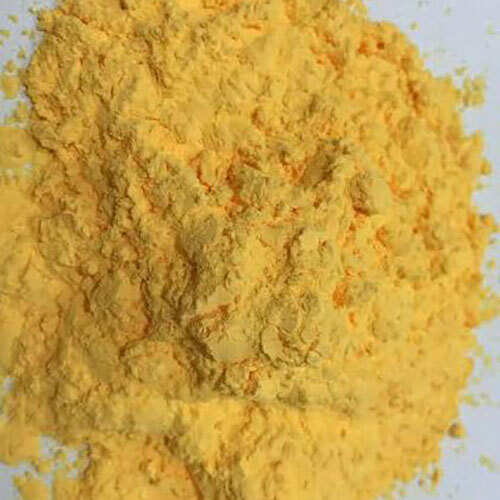
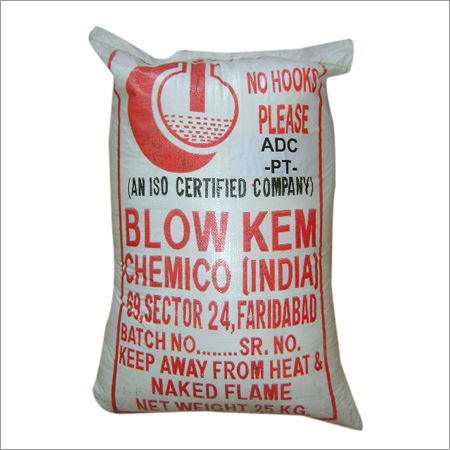
ADC Blowing Agent
MOQ : 100 Kilograms
ADC Blowing Agent Specification
- Other Names
- ADC; AZO; Azoformamide
- Smell
- Odorless
- Ph Level
- Neutral
- Poisonous
- No
- Melting Point
- 200C (decomposes before melting)
- Shape
- Powder or granules
- Molecular Weight
- 116.08 g/mol
- Boiling point
- Decomposes before boiling
- Form
- Solid
- Structural Formula
- NH2CON=NCONH2
- HS Code
- 29270090
- Purity
- 98%
- Density
- 1.65 Gram per cubic centimeter(g/cm3)
- Molecular Formula
- C2H4N4O2
- Solubility
- Insoluble in water, soluble in alkali solutions
- Taste
- Odorless
- Classification
- Chemical blowing agent
- Grade
- Industrial Grade
- Standard
- Industrial standard
- Type
- Chemical additive
- Usage
- Used for foaming PVC, EVA, PE, PP, and rubber products
- Application
- Other
ADC Blowing Agent Trade Information
- Minimum Order Quantity
- 100 Kilograms
- Payment Terms
- Telegraphic Transfer (T/T), Cheque
- Delivery Time
- 1 Week
- Sample Available
- Yes
- Sample Policy
- Free samples are available
- Certifications
- ISO 9001:2015 Certified
About ADC Blowing Agent
Blowkem ADC L5005
| Product | Particle Size | Gas | DT | Application |
| (microns) | (ml/gm) | (C) | ||
| Blowkem ADC L5005 | - | - | - | Used in PVC Footwear Shoe soles with injection moulding PE Extrusion Light Weight EVA Slippers with compression moulding Rubber foams and various other processing techniques like extrusion rotational moulding for LDPE etc |
DT By Open Capillary Tube Method
Packing: 25 Kgs
Packing Type: Packed in HDPE polythene - lined woven bags with inner polythene bag
Efficient Foaming Performance
ADC Blowing Agent provides excellent expansion properties and uniform cellular structure, making it ideal for producing lightweight, durable products in the plastics and rubber industries. Its high decomposition efficiency ensures reliable performance across different polymer matrices.
Compatible with Multiple Polymers
Designed for versatility, ADC can be utilized in foaming processes for PVC, EVA, PE, PP, and rubber. Its compatibility with various thermoplastic and elastomeric materials allows manufacturers to achieve precise product performance and flexibility in formulation.
Safe Storage and Handling
Although ADC Blowing Agent is classified as toxic, it is odorless and neutral in pH, simplifying storage and handling with standard safety procedures. Always follow recommended guidelines to minimize exposure and risk during manufacturing operations.
FAQs of ADC BLOWING AGENT:
Q: How does ADC Blowing Agent function during plastic and rubber foaming?
A: ADC Blowing Agent decomposes at elevated temperatures (around 200C), releasing gases that create a cellular structure in the polymer matrix, resulting in lightweight, foamed products such as insulation, soles, and mats.Q: What polymers and products are most suitable for ADC Blowing Agent usage?
A: ADC is optimized for use with PVC, EVA, PE, PP, and various rubber formulations, making it suitable for applications including automotive components, packaging, footwear, and construction materials.Q: When should ADC Blowing Agent be added during the manufacturing process?
A: ADC should be incorporated during the compounding or mixing phase with resins and other additives before the molding or extrusion process, ensuring uniform dispersion and effective foaming action.Q: Where is ADC Blowing Agent typically sourced and supplied from?
A: ADC is widely manufactured and supplied by Indian exporters and chemical producers who adhere to industrial standards and provide the product in powder or granule form for different production needs.Q: What is the recommended process for handling and storing ADC Blowing Agent safely?
A: Store ADC in a cool, dry place away from direct sunlight and incompatible materials. Use protective gear during handling, as the substance is classified as toxic, and ensure proper ventilation in the workspace.Q: What benefits does ADC Blowing Agent offer compared to other chemical foaming agents?
A: ADC delivers consistent cell size, high foaming efficiency, and broad compatibility with multiple polymers, contributing to greater product quality and cost-effectiveness in industrial applications.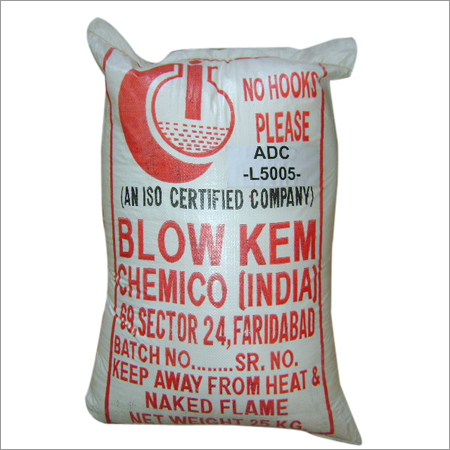
Tell us about your requirement

Price:
Quantity
Select Unit
- 50
- 100
- 200
- 250
- 500
- 1000+
Additional detail
Mobile number
Email

More Products in Azodicarbonamide (ADC) - Blowing Agent Category
Profiles Blowing Agent
Minimum Order Quantity : 100 Kilograms
Application : Other
Grade : Industrial Grade
Melting Point : 158160C
Other Names : ADC, ADA, FOAMING AGENT
Smell : Other, Odorless
PROFILES 2272 P Blowing Agent
Minimum Order Quantity : 100 Kilograms
Application : Other
Grade : Industrial Grade
Melting Point : >120C
Other Names : ADC, ADA, Azobisformamide
Smell : Other, Odourless
Azodicarbonamide (ADC)- Blowing Agent
Minimum Order Quantity : 100 Kilograms
Application : Other, Used as a foaming/blowing agent in plastics, rubbers, and shoe soles
Grade : Industrial Grade
Melting Point : >200C (decomposes before melting)
Other Names : ADC, AZO, CADA, ADA
Smell : Other, Mild, characteristic
ADC PT
Minimum Order Quantity : 100 Kilograms
Application : Other
Grade : Industrial Grade
Melting Point : 150C
Other Names : ADC, ADA
Smell : Other, Odorless


Address
CHEMICO (INDIA)
We serve the nation by our Quality products
We serve the nation by our Quality products
- Plot No. 69, Sector-24, Faridabad - 121005, Haryana, India
- Phone :08045804498
- Send Inquiry
 Send Inquiry
 Send Inquiry
 Send SMS
 |
CHEMICO (INDIA)
All Rights Reserved.(Terms of Use) Developed and Managed by Infocom Network Private Limited. |
